
Last Updated on 02/10/2026
If your first introduction to Wrexham was the hit Disney+ documentary Welcome to Wrexham, which documents Ryan Reynolds and Rob McElhenney’s takeover of Wrexham AFC, you may be thinking, is it worth visiting Wrexham beyond football?
You may also be thinking, if you visit Wrexham for football does that involve meeting Ryan Reynolds too…I’ll let you know in this post! But, let’s get back to the initial question..What is there to do in Wrexham besides football and is it actually worth visiting?!
Spoiler – Wrexham is absolutely worth visiting! Wrexham is a county after all, with so much to explore outside the city centre and away from the football ground – I can’t wait to share more in this Wrexham blog post!
Because while the football story is brilliant (and honestly, you don’t need to be a football fan to get swept up in it…I am now halfway through series 1 of the show), Wrexham county has been quietly sitting on some of the most spectacular scenery, history and experiences in North Wales, long before Hollywood came knocking.
We’re talking a UNESCO World Heritage Site you can kayak across, a 700-year-old castle with intricate ceilings that’ll give you a neckache admiring them, beautiful valleys to explore on foot, and a country pub with a spa that’s been named one of the cosiest in Britain. Yes, I do wish I’d stayed longer!
Disclaimer: My trip to Wrexham is part of a press trip with This is Wrecsam, exploring exciting places to visit in Wrexham county, including the famous football ground and breathtaking Welsh wonders in the countryside. Whilst my trip is kindly hosted, all thoughts and photos (unless otherwise stated) are my own. Thanks for supporting my content!
So if you’ve been wondering whether Wrexham is worth a visit beyond the Wrexham AFC Racecourse Ground, grab a cuppa and let me walk you through everything this underrated corner of Wales has to offer.
How to Visit Wrexham – is it worth it?
I’ll be honest, Wrexham wasn’t even on my radar as a destination worth visiting, even despite its recent Hollywood fame. I had no idea where it was, let alone what to do in Wrexham…

Wrexham (also known as Wrecsam in Welsh…and not a typo by the local tourist board as I initially thought…), is located in North Wales, near the English border and is within easy reach of Chester, Liverpool and Manchester. The town became Wales’ newest city in 2022, and is easily reachable by train with direct services into Wrexham General from Chester, Birmingham, Crewe and Shrewsbury, by car via the A483 or by bus from surrounding areas.
In all honesty, to see the best of Wrexham, you need to explore beyond the city centre, so I’d recommend a car for a road trip or a private tour of Wrexham to see the best of what Wrexham county has to offer.
What to Do in Wrexham Beside Football
There’s no denying how integral football is to Wrexham, as it’s brought investment, attention and pride to a city after some notable hardships (which I’ll delve into later in this post.) But Wrexham county was spectacular long before Welcome to Wrexham started streaming (despite being unbeknown to me and many others beforehand!)
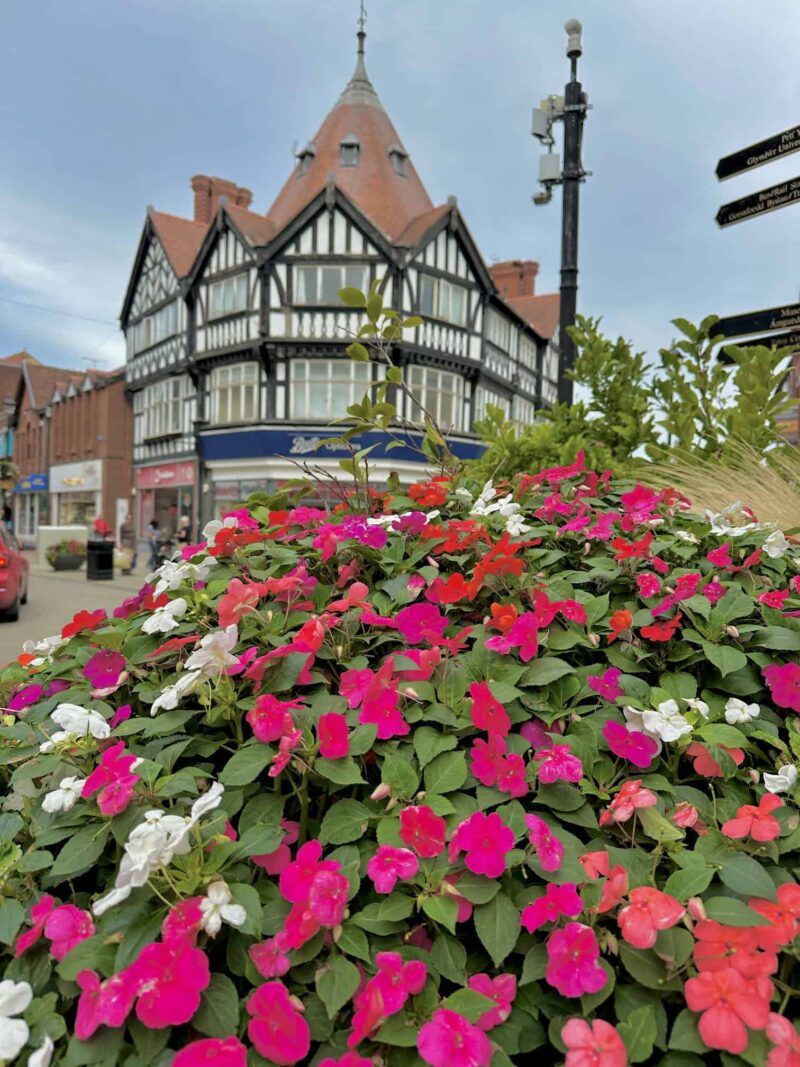
Home to one of the seven wonders of Wales, a 300-million-year-old fossil forest, two National Trust sites and a breathtaking UNESCO World Heritage site, there is more to see in Wrexham than Mr Ryan Reynolds, but it goes without saying, seeing him would definitely be up there as one of the top attractions in Wrexham…
Kayaking Over the ‘Stream in the Sky’ Pontcysyllte Aqueduct
OK, let’s start with the showstopper and my personal favourite!
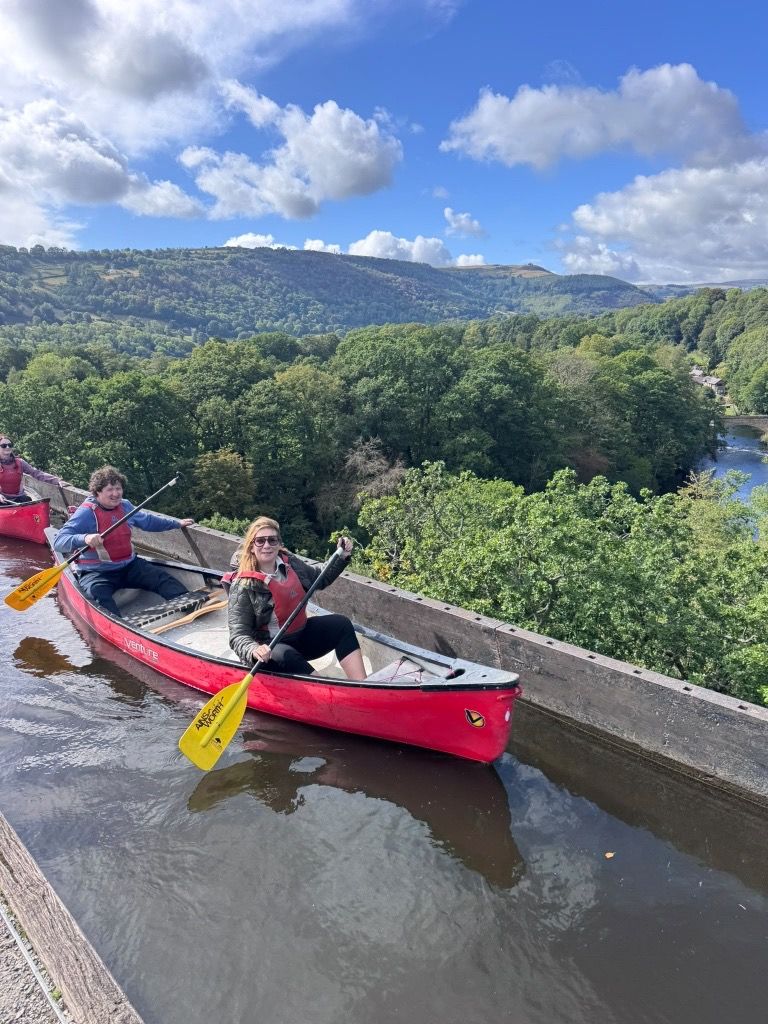
I had seen pictures of the Pontcysyllte Aqueduct on Instagram many years ago without knowing where it was. Little did I know that you can paddle a kayak across this breathtaking UNESCO World Heritage Site, 39 metres above Dee River valley, and surrounded by the most scenic views you may ever encounter.
Known as the ‘Stream in the Sky’, the Pontcysyllte Aqueduct carries the Llangollen Canal across the Dee Valley in a narrow iron trough (completed in 1805) to become the highest aqueduct in the world you can navigate.
I was in two minds about kayaking the Pontcysyllte Aqueduct, one, because kayaking often hurts my thighs, two, because I prefer paddle-boarding, and three, because I’d been full of cold for the last two weeks prior…
All my reservations didn’t even account for the sheer drop and dangers that come with kayaking the Pontcysyllte Aqueduct…
As you cross the aqueduct the water is barely wider than the kayak, with a sheer drop on one side and a towpath for people to walk or cycle on the other side. It’s quite the surreal experience, as you wave and smile at onlookers taking photos, whilst trying not to think about your kayak toppling off the edge as you aimlessly paddle along…

After racing our way into pole position over the aqueduct, my kayaking buddy Sean and I couldn’t quite believe the breathtaking views that awaited us! Distracting ourselves from the sheer drop as we clutched the side of the railings for dear life, we kept things light-hearted as we crossed the aqueduct singing and quoting Father Ted. Onlookers must have thought we were nuts!

Initial kayaking reservations aside, I soon discovered paddling across the 127ft (39 m) aqueduct in a kayak is one of those once-in-a-lifetime experiences that makes you feel simultaneously alive and slightly terrified at the same time (and I’m so glad I gave it a go!)
Whilst our group only kayaked a small proportion, the Pontcysyllte Aqueduct and Canal World Heritage Site spans 11 miles across both Wales and England, encompassing canals, aqueducts, tunnels and viaducts.

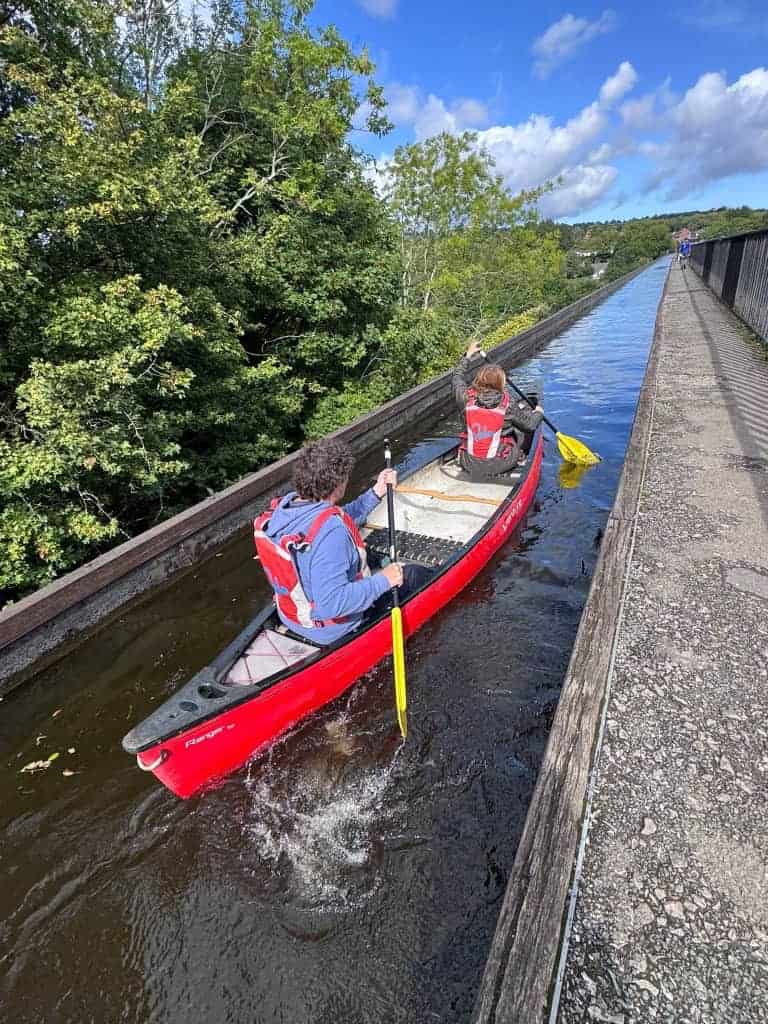
I highly recommend booking a Pontcysyllte Aqueduct kayak experience with TNR Outdoors – our guide Tom gave us lots of practical tips and ensured we had a fun experience. The company also do adrenaline activities such as rock-climbing, abseiling, gorge walking, axe-throwing, archery, as well as paddlesports including white-water rafting.
The Practical Bits:
- Who to book with: TNR Outdoors run guided trips along the Llangollen Canal including the aqueduct crossing. No experience needed, they provide all equipment, kayaks and a guide.
- Price: Aqueduct Tours start from £47.25 for 2-½ hours.
- Minimum age: 8 years old for the aqueduct crossing
- Not great with heights? Don’t worry, they can plan an alternative canal route that skips the aqueduct but still gives you a gorgeous paddle through the Welsh countryside.
📌 Save this post on Pinterest for later!
Exploring Trevor Basin On Foot or Scenic Aqueduct Canal Tour
If kayaking 39 metres above a river valley summit sounds like your idea of a nightmare (no judgement here), you can still experience the Pontcysyllte Aqueduct on foot, or cycle over it (though, I think the latter would be more risky than kayaking with the amount of people walking the path).
Trevor Basin is the starting point for most aqueduct adventures and home to a free visitor centre run by the Canal & River Trust. It’s a lovely spot to wander around, with some narrowboats serving coffee, ducks gliding past, and picturesque views you’ll want to capture on camera.
From here, you can walk across the aqueduct along the towpath. Fair warning – it’s narrow, there’s no railing on the canal side, and looking down will give you a real appreciation of those 39 metres… Though, it’s well worth it for the views across the Dee Valley.

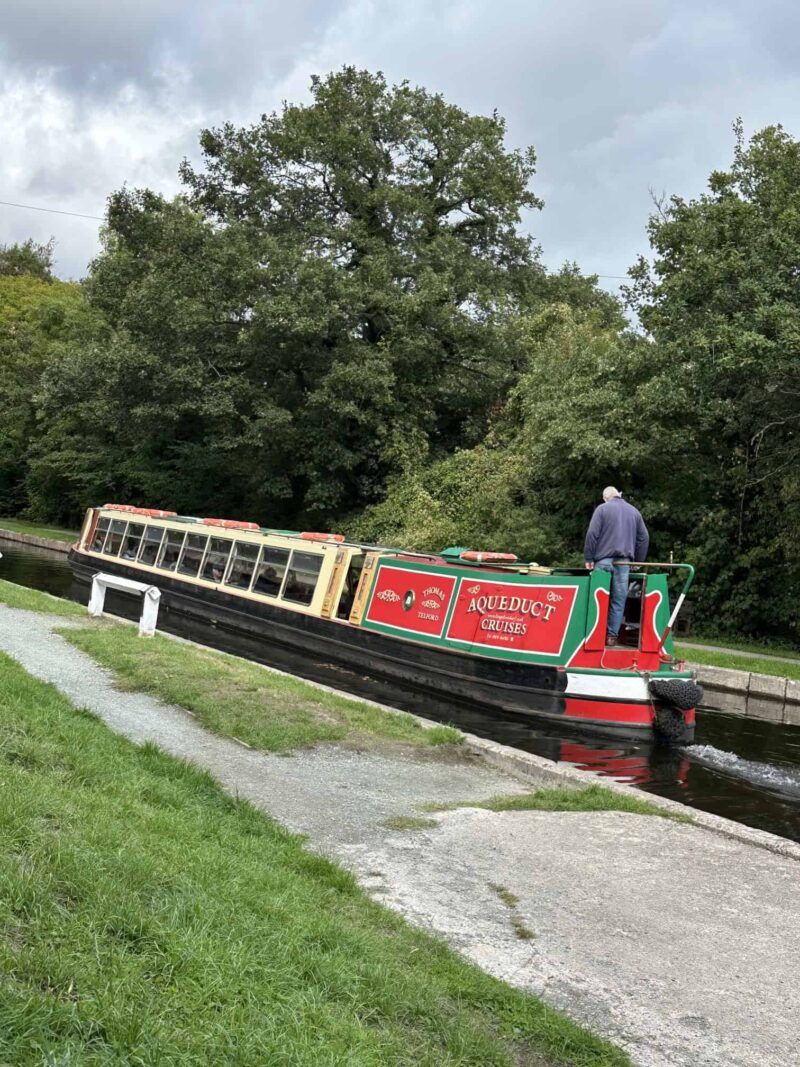
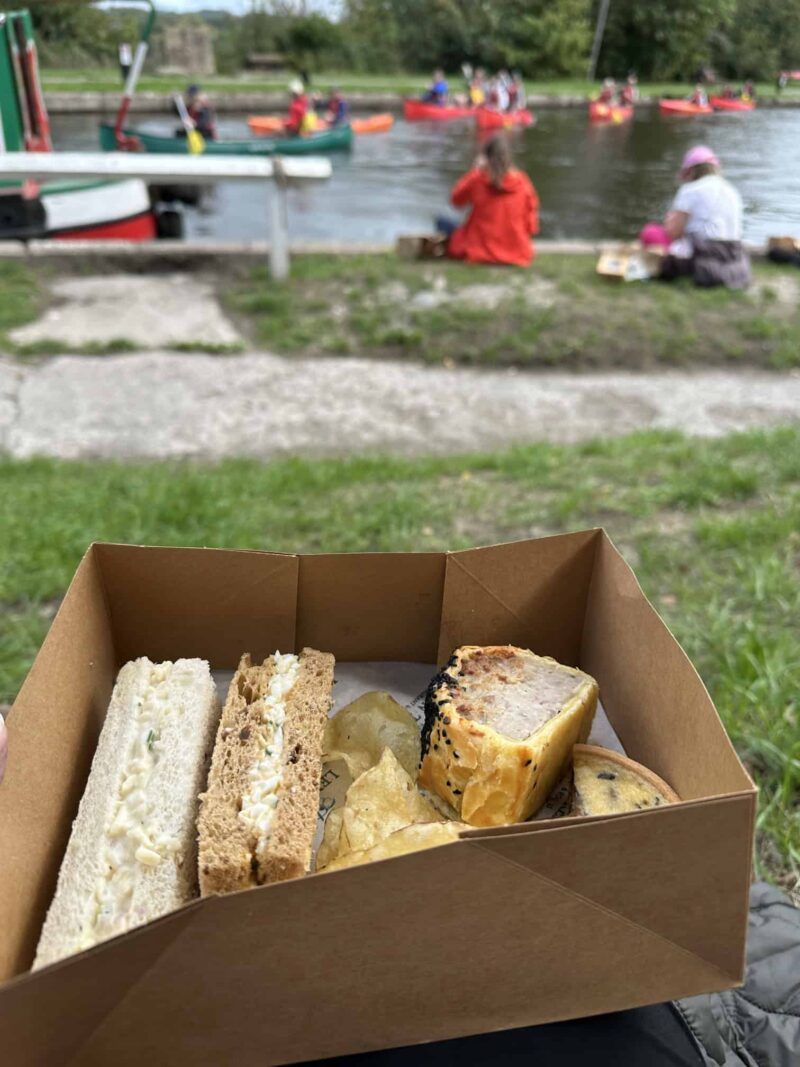
If you fancy seeing the aqueduct from the water without paddling yourself, canal boat trips run from Trevor Basin too, which is a wonderfully relaxed way to take it all in. I was especially eyeing up the ones that also served afternoon tea…
The Practical Bits:
- Where: Trevor Basin, Off Station Road, Trevor, Wrexham, LL20 7TY
- Visitor centre: Free entry, open daily 10am–4pm (until end of October)
- Parking: Pay-and-display car park, open 8am–8pm
- Don’t miss: The aqueduct adventure trail, great if you’ve got kids in tow
- Nearby: Tŷ Mawr Country Park and the Offa’s Dyke Trail both pass through this area, so you can easily make a half-day of it
Erddig Hall Unique National Trust Property
Most stately homes want you to admire the chandeliers and imagine yourself living a life of luxury. Erddig would rather introduce you to the butler, the carpenter, the housemaid and the estate gardener.

This late 17th-century country house on the outskirts of Wrexham is a unique National Trust property, as rather than telling the tales of aristocracy and wealth, you learn about the Yorke family who came from a modest background and treated the staff who worked the estate as family.
The Yorke family came to live at Erddig for over 240 years after finding themselves in the fortunate position of inheriting the estate and 30,000 possessions from their ancestor John Mellor, a successful London Lawyer who purchased the property in 1714 after its previous owner went bankrupt.
After falling into disrepair and passed to the National Trust in 1970, the trust uncovered in excess of 30,000 items in the house, including furniture, textiles, and the prize treasure the State Bed, all cared for and preserved for generations by the Yorke family who survived against all odds facing decline, decay and dereliction.
But, what makes Erddig genuinely special is its extraordinary collection of servants’ portraits, photographs and poems spanning 200 years. The Yorke family commissioned portraits of their household staff (something virtually unheard of at the time) and the result is a rare window into the lives of the people who worked tirelessly behind the scenes to keep Erddig running.

Touring Erddig with a guide, you can learn about staff, including Thomas Rogers who worked and lived on the estate with his family, with pictures of him and his daughter evidencing that it wasn’t only generations of the Yorke family who lived at Erddig, it was generations of staff that called Erddig home too. Incredibly, some of the details on the portraits had been quite clearly drawn over, potentially demonstrating one of the earliest forms of photoshopping.
The below-stairs rooms that really give you a glimpse of what daily life looked like behind the grand facade. The historic kitchens, laundry room, bakehouse and joiners’ workshop
Outside, the Grade I listed 18th-century walled garden has a restored formal design with Dutch influences, and over 180 varieties of apple tree in the orchard, which are used for the annual Apple Harvest Festival, which takes place early Autumn with activities such as apple-picking, apple-pressing (with cider on sale). In previous years there has even been a Big Apple Food Challenge, in which chefs in restaurants around the county were challenged to create a food dish using the apples grown on the Erddig estate.

Beyond the garden, 1,200 acres of parkland stretch out with meadows, lakes, woodland and waymarked walking trails that even take you on a lovely walk from Erddig to St Giles Church located in the Wrexham city centre in 20 minutes. St Giles is well worth a visit too as you will find out further in the post!
If you’re visiting Erddig with kids, there is also a Wolf’s Den natural play area.
The Practical Bits:
- Where: Erddig, Wrexham, LL13 0YT
- Managed by: National Trust
- Opening times: House 11:30–15:30 | Garden 10:00–17:00 | Parkland dawn to dusk (free access)
- Admission: Adults from £19.00, Children (5–17) from £9.50. Free for National Trust members. Free parking.
- Facilities: Hayloft Restaurant (food, drinks, afternoon tea), shop, natural play area, walking trails
- Top tip: Don’t rush the below-stairs rooms — they’re the highlight. And if you’re visiting in autumn, the apple orchard is something special.
The Ceiriog Valley — North Wales’ Best Kept Secret
The Ceiriog Valley (or Dyffryn Ceiriog, if you want to impress the locals) runs westward from Chirk, deep into the Berwyn Mountains, following the River Ceiriog through rolling green hills, ancient woodland, tiny stone villages and farmland that has sheep outnumbering people about 500 to one.
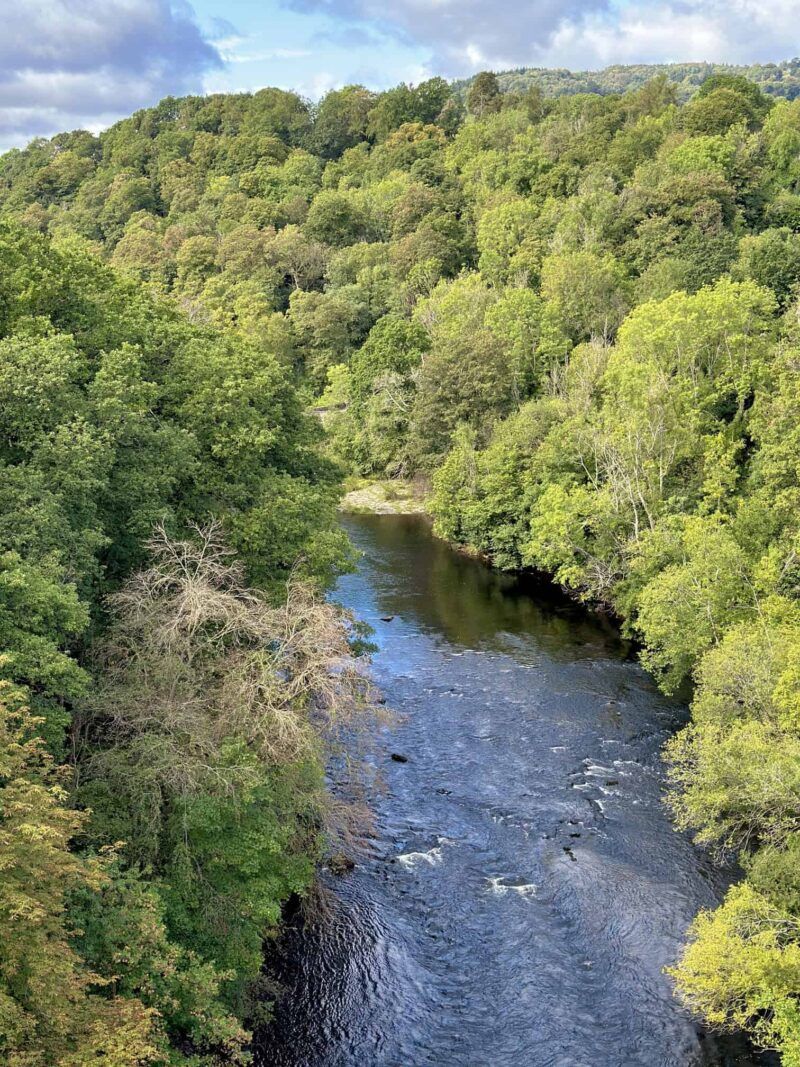
The perfect location for walking, the village of Glyn Ceiriog is a good starting point for walks, and at the very end of the road you’ll find Llanarmon Dyffryn Ceiriog, a tiny hamlet, which is well worth visiting and takes me on to my favourite stay of the trip…
The Hand at Llanarmon — One of Britain’s Cosiest Pubs With a Spa
Speaking of Llanarmon, located at the very end of the Ceiriog Valley, you’ll find The Hand at Llanarmon, named one of the thirty cosiest pubs in Britain and one of the UK’s best pubs with spas.
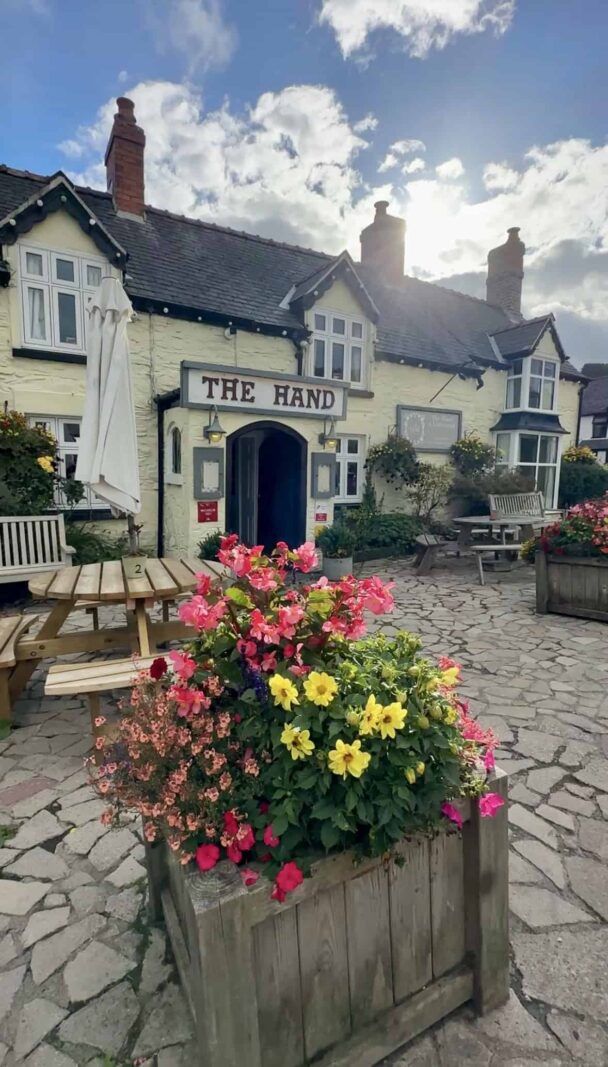
As soon as some of us heard the mention of an outdoor spa area, we honestly couldn’t have gotten in our swim stuff and got down there quick enough! We soaked up the views, whilst enjoying a glass of bubbles whilst lulling in the hot tub. Drinks are slightly on the expensive side, with a glass of prosecco priced at £9.50 a glass, which made me thankful there wasn’t a QR next to the hot tub to encourage me to buy more drinks. But for these views, it was worth every penny!
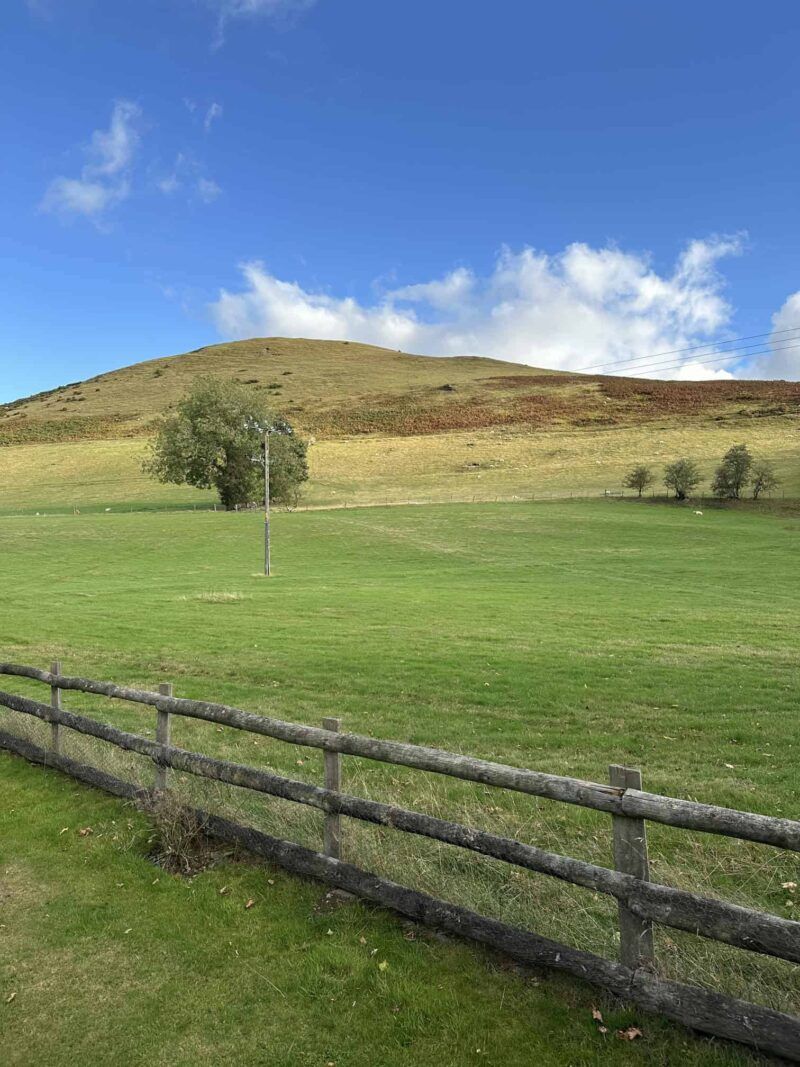
My room, a beautiful corner-suite in the historic end of the building, had a huge bed, a very welcoming bath and I couldn’t resist a soak in the tub before heading downstairs for dinner.
Our group were treated to a lovely dinner of elevated Welsh comfort dishes, cooked by award-winning Head Chef Grant Mulholland, before heading into the cosy rustic bar area for a nightcap.


The Hand is a real country gem – Needless to say, I was very sad to have to vacate my bed the next morning, and it is certainly somewhere I’d love to return to stay and explore the village walking routes.
The Practical Bits:
- Where: Llanarmon Dyffryn Ceiriog, near Llangollen, Wrexham, LL20 7LD
- What it is: Country hotel, restaurant, pub and spa
- Book via: thehandhotel.co.uk
- Perfect for: A couples escape, a girls’ weekend with countryside walks, or anyone who wants to feel genuinely miles from anywhere
- Activities nearby: Walking in the Berwyns, horse riding, fishing — the hotel can arrange these for you
Chirk Castle — A 700-Year-Old National Trust Gem
If your idea of a perfect afternoon involves wandering around a medieval castle, tucking into cake in a café housed in historic kitchens, getting lost in immaculate gardens, then don’t miss visiting Chirk Castle. It was actually built in 1295 to maintain English rule over Wales, but let’s not dwell on the politics.

Chirk Castle is the only Welsh Marcher fortress that’s been continuously lived in for over 700 years, and is the last castle of this period resided in for this amount of time. The Myddelton family called it home for over 400 years from 1595, and until very recently used the private apartments in the Bachelor Tower. Inside the castle you’ll find beautifully preserved staterooms filled with portraits, antique furniture and centuries of accumulated curiosities, including a Japanese chest inlaid with mother-of-pearl.
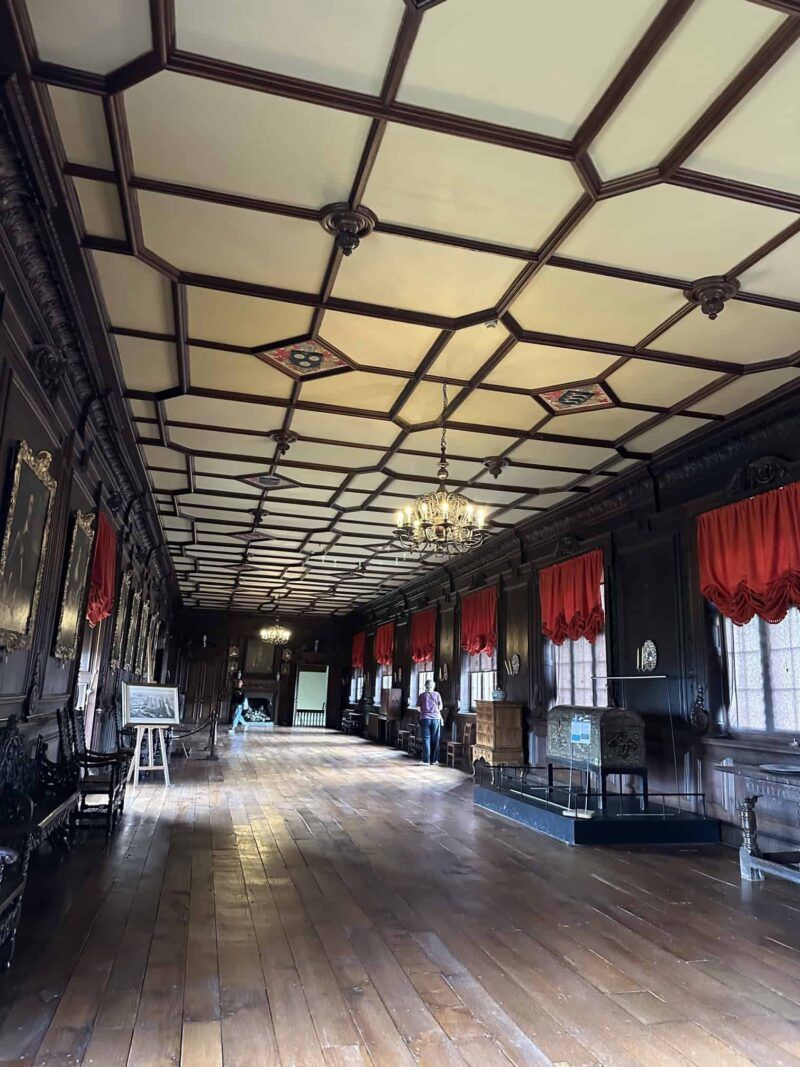
My favourite aspect (other than the delicious slice of barra birth – Welsh fruit cake we enjoyed beforehand) are the unique intricately designed ceilings found in the stately rooms.
The animal painting outside the library is certainly something to ponder too…the lion looks the spitting image of the cowardly lion from The Wizard of Oz.
Chirk Castle has a 5.5-acre award-winning garden, with perfectly manicured lawns, clipped yew hedges, and panoramic views stretching to Cheshire and Shropshire apparently visible on a clear day. The Bow Drawing Room was a favourite spot for Lady Margaret Myddelton to enjoy painting the views of the beautiful gardens, and is now used by local communities to arrange art, yoga and mindful sessions.
Beyond the gardens, there’s a 480-acre estate with ancient trees, wildflower meadows, and walking trails to enjoy, whether you fancy a gentle stroll or a proper wander.
The Practical Bits:
- Where: Chirk Castle, Chirk, Wrexham, LL14 5AF
- Managed by: National Trust
- Opening times: Castle 12:00–16:30 | Gardens 10:00–17:00 (check the National Trust website for seasonal variations)
- Admission: Adults from £19.00, Children (5–17) from £9.50, Family from £47.50. Free for National Trust members.
- Facilities: Café in the castle kitchens, shop, second-hand bookshop at Home Farm, play areas for kids
- Top tip: Get there when the gardens open at 10am and explore outside first — the castle opens at noon, so you can work your way in
Things to do in Wrexham Town Worth Visiting
After sharing some of my favourite spots in Wrexham county, it’s only fair I share some from the city centre, and in this regard, I probably should rename the header things to do in Wrexham city worth visiting, following the city status bestowed on Wrexham in 2022. However, the more time you spend in the centre, the more you get a sense of the pride, passion and close-knit community that is more befitting of a town, rather than a city.

Before the recent football fame, the pride and passion for Wrexham was almost diminished following the closure of the coal-mining and steelworks operations in the 1990s, which threw Wrexham into high unemployment with thousands of jobs lost, which led to the disrepair of the town centre and many local businesses suffering.
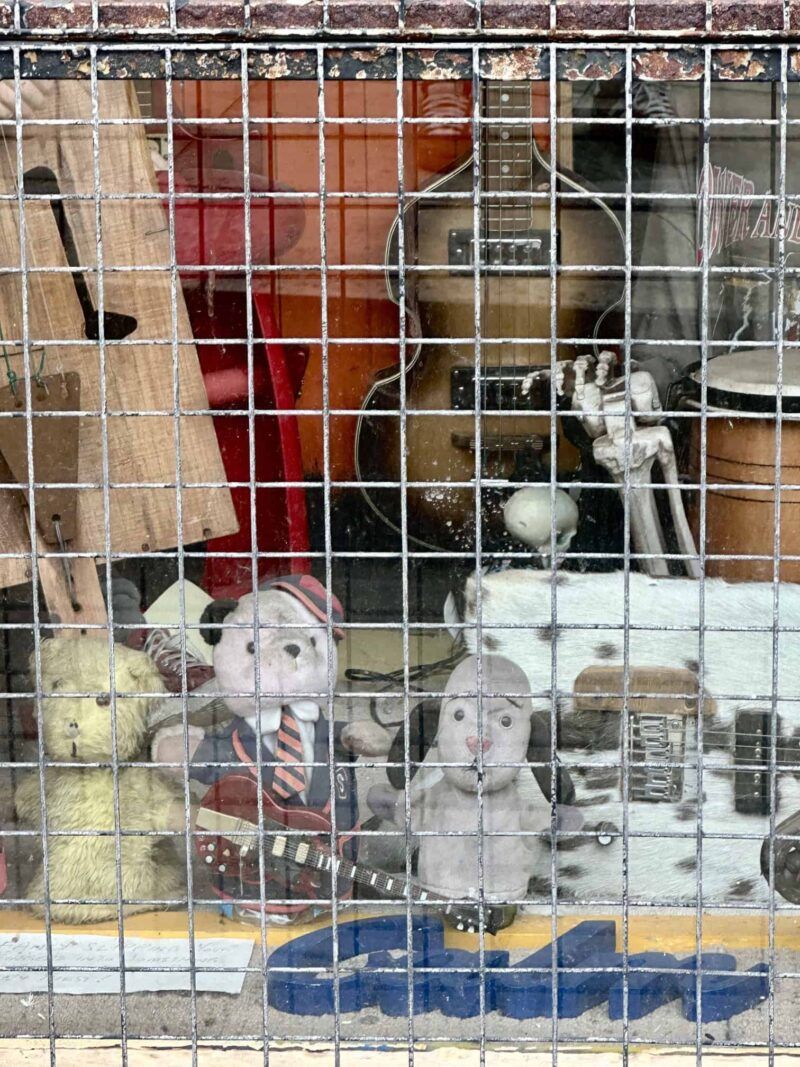
This made promoting the city a hard task for the This is Wrecsam team, who now have a renewed sense of purpose following the resurgence of town pride, from investment initiatives to improve Wrexham for locals and as a tourist destination. On my recent visit, the This is Wrecsam team were beaming with pride as they talked about new openings in the city and the hopes for Wrexham to become UK City of Culture 2029, which shone way beyond a simple marketing ploy. It’s a feeling that is unescapable even after you leave, so much so that I actually began watching Welcome to Wrexham as soon as I returned.

Wrexham is constantly evolving, and whilst overall, I would recommend exploring the county, rather than centering your trip only around the city centre, there are certainly some gems worth visiting in Wrexham town centre too.
Wrexham Street Art Walking Tour
Walking tours are the best way to familiarise yourself with any city, which is why they are included in most, if not all of my city break itineraries. This walking tour around Wrexham had the added bonus of exploring street art in Wrexham. So, after tucking into a fantastic breakfast at The Lemon Tree, we grabbed some coffees and pastries from Queen’s Square Social and got on our merry way to check out some Wrexham murals.
One of the prettiest murals on the tour is titled “Wrexham in Bloom” and features a daffodil in three stages of bloom, which when viewed under different light during the day creates a light-reactive tribute to Wales.

Our guide, Liam Stokes-Massey, otherwise known as the @pencilcraftsman had all the knowledge about the artists, inspiration behind the designs and the tools used, because he is a local Wrexham Artist himself, and has actually painted and collaborated on some of the street art works we saw on the tour. Here’s one of his murals below:

One of the things I love most about street art is that it tells a story about a location, its people and often its hardships as a means of free expression, and many of the Wrexham murals are football related or reference the rich mining and industrial heritage of the city.
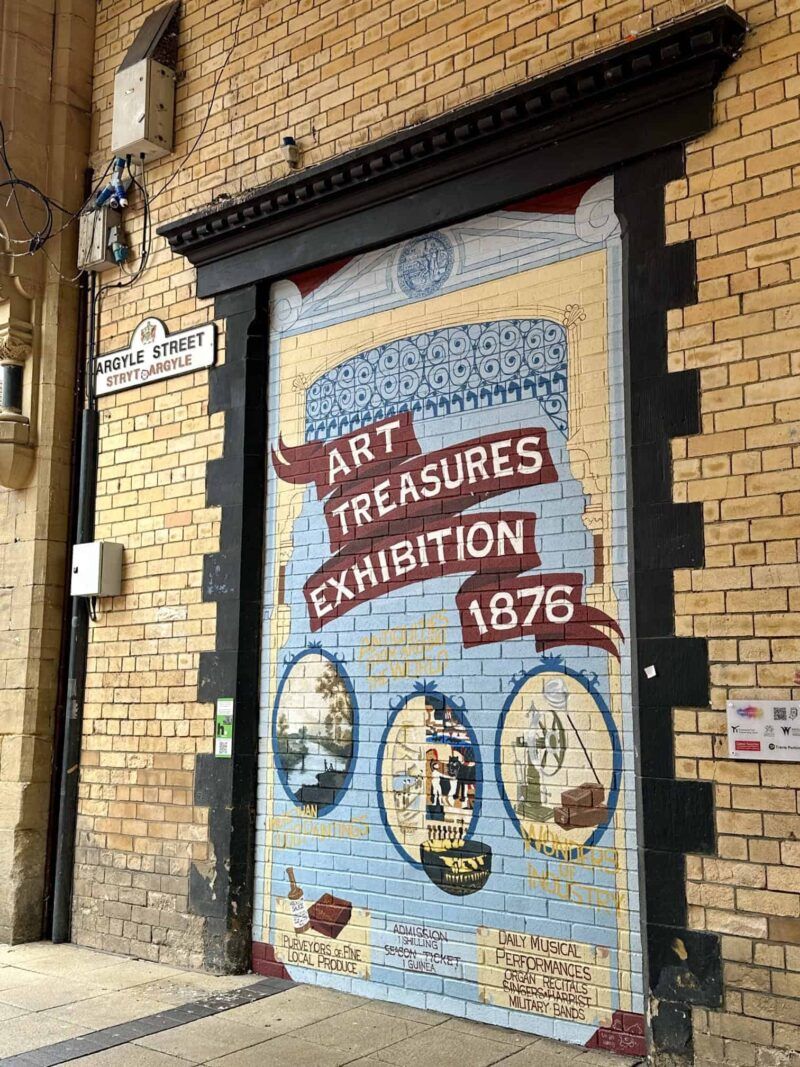
The mural titled “Art Treasures Exhibition 1876” by Rachel West (The Art Bunny) showcases art, antiquities, industrial displays, and local goods including Wrexham’s hot sauce, which was formerly the best-selling sauce in the UK and sold in Fortnum & Mason. They definitely need to bring this back!
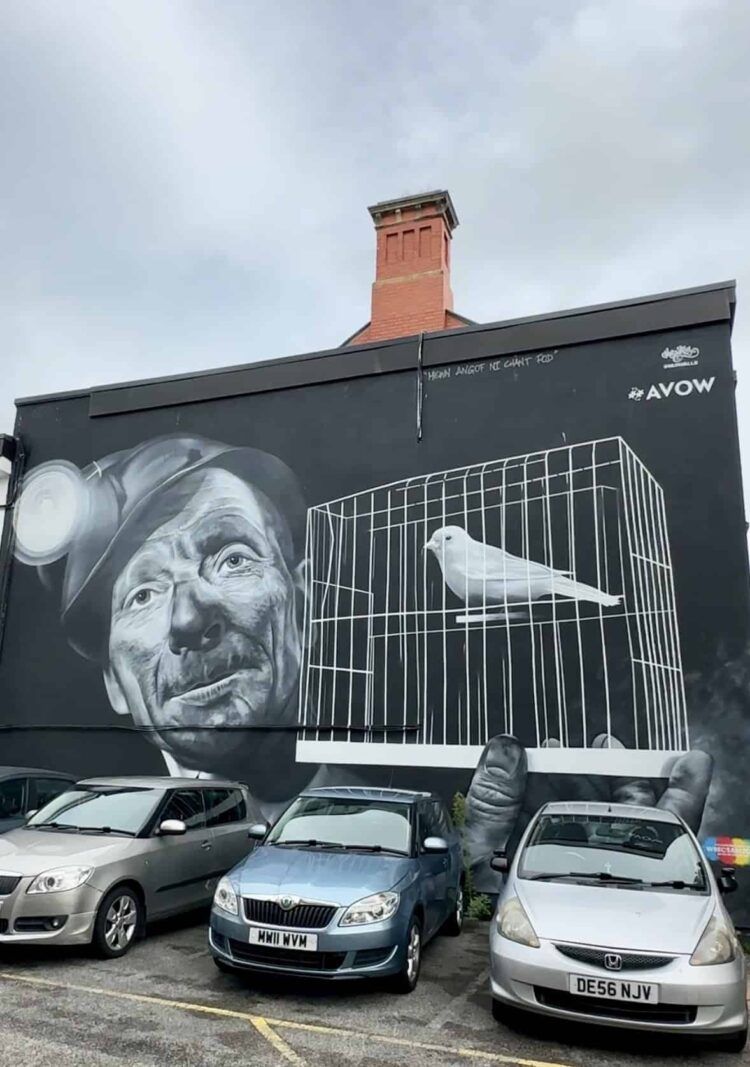
My favourite Wrexham mural “The Miner” by John Colwell, MurWalls, pays tribute to the mining disaster, which claimed the lives of 266 people in 1934, with the stencil “Mewn Angof Ni Chant Fod”, which broadly translates from Welsh to “they will not be forgotten.” The level of detail to portray the miner’s face and hands is incredible, and if you look closely you can see 266 on the miner’s helmet. Another poignant fact about this artwork is that a visitor to Wrexham recognised the miner painted as his Grandad.
Located around the corner from “The Miner” is “The Arc” by David Annand, a monument celebrating Wrexham’s industrial heritage featuring a steelworker and a miner creating an arc as a symbol of strength and cooperation between industries.
Stori Brymbo
If you’re keen to uncover Wrexham’s heritage and more murals, head to Stori Brymbo, a community-led visitor attraction sharing over 300 million years of history and innovation in Wrexham.
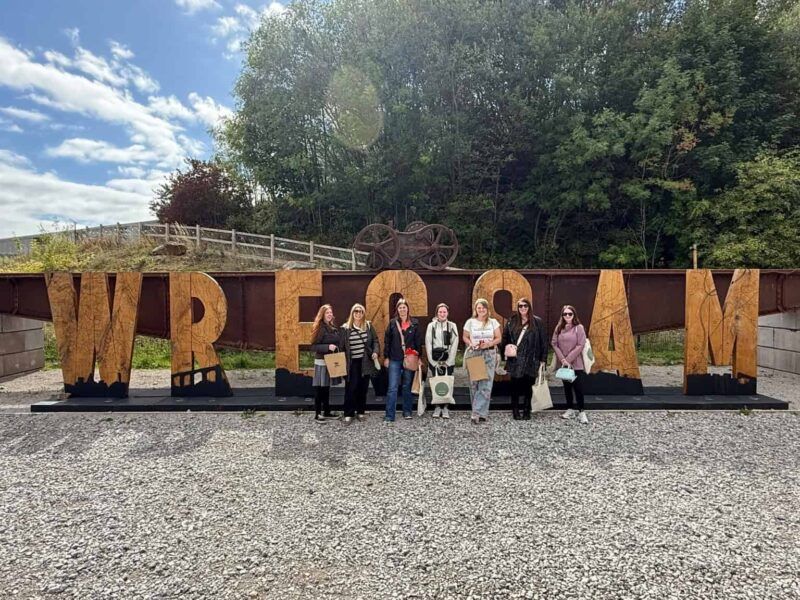
Stori Bymbo, which opened in September 2026, provides an in-depth look at the natural, industrial and social history of Wrexham, where you can see everything from Georgian ironworks, the industrial and mining heritage, as well as, an incredible discovery of 300 million old fossils in a fossil forest (including 2 metre long millipedes!)

There’s also a fun-filled digging area for kids, which my 4 year-old nephew would love, and a cafe on-site if you want to grab a bite to eat for lunch.
The Museum of Two Halves — Wrexham’s Brand New Football & Heritage Museum
OK, I know I said this post is about what to do in Wrexham beyond the football, but if you want to find out more about the heritage of Wrexham, it would be rude not to visit The Museum of Two Halves; a brand new museum which opened in September 2026, and covers Wrexham’s wider history and, of course, its beautiful game.
The football half is fun even if you’re not a die-hard fan. The museum is proud to be home to the official Welsh Football Collection, the largest collection of Welsh football memorabilia in public ownership, and as the Welsh Football Association was founded in Wrexham 150 years ago, this makes the new museum opening in 2026 even more significant to celebrate the association on its special anniversary year.


The museum has lots to do for kids, and big kids – I had a lot of fun playing around on the interactive exhibits, which are well worth a visit on their own!
The Wrexham Museum half covers the town’s archaeology (Bronze Age and Roman finds), its industrial and mining heritage, daily life through the centuries, and the diverse communities that have shaped Wrexham into what it is today.

Housed in a beautifully renovated 1855 building, with a very apt name, The Museum of Two Halves covers the Football Museum for Wales on one side, and the Wrexham Museum covering the town’s wider history on the other.
The Practical Bits:
- Where: Regent Street, Wrexham
- Opened: September 2026
- What’s inside: Football Museum for Wales + Wrexham Museum
- Check before visiting: Visit wrexhamheritage.wales for current opening times and admission prices
St Giles’ Church — One of the Seven Wonders of Wales
When it comes to Wrexham’s heritage must-see, St Giles’ Church is one of those places that surprises you from the very outset, as you approach the impressive wrought-iron gates to the church tucked around the corner of the high street.
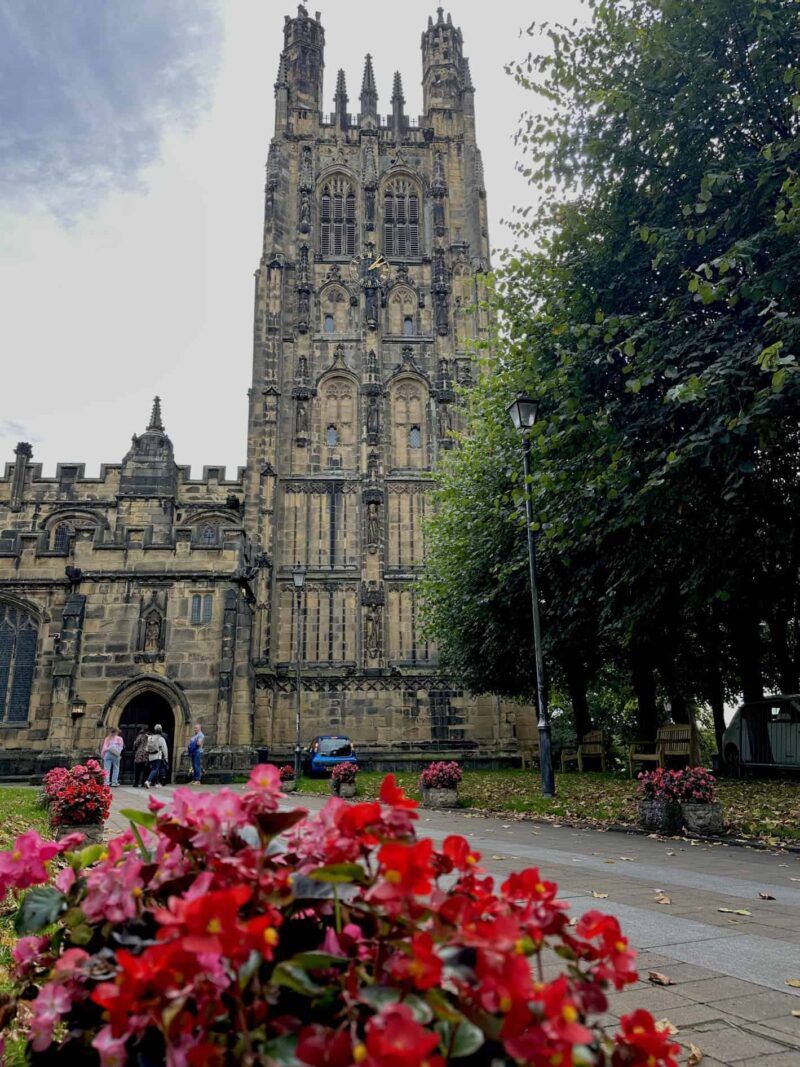
St Giles’ Church’s 135-foot tower, built in 1506, is actually one of the famous Seven Wonders of Wales alongside Snowdon, Pistyll Rhaeadr waterfall (a waterfall that is certainly on my list after exploring the Brecon Beacons Four Waterfalls Trail) and the other Welsh wonders, all of which I am yet to explore.
The history of the church, with pillars dating back to the early 1400’s, an impressive assortment of treasures, including a 1st edition of King James Bible dated 1611, and the fact that Elihu Yale is buried here – yes, the man who gave his name to Yale University. His connection between Wrexham and one of America’s most prestigious universities may possibly be one of the earliest indicators of the stateside crossover and American fame set to bestow the former Welsh market town. And there was me thinking the American flag in the church was for Rob McElhenney and Ryan Reynolds…
However, despite the random Yale connection and historical artefacts, it was an insightful tale of a sheep in the church that really piqued my interest…
One of the few facts I knew about Wales before I visited is that the population of people is less than the population of sheep…and when you hear about Llewelyn, you’ll know why! Let me tell you, Llewelyn the sheep lived like an absolute king – with his own rank, wage, home with a sofa and wardrobe!

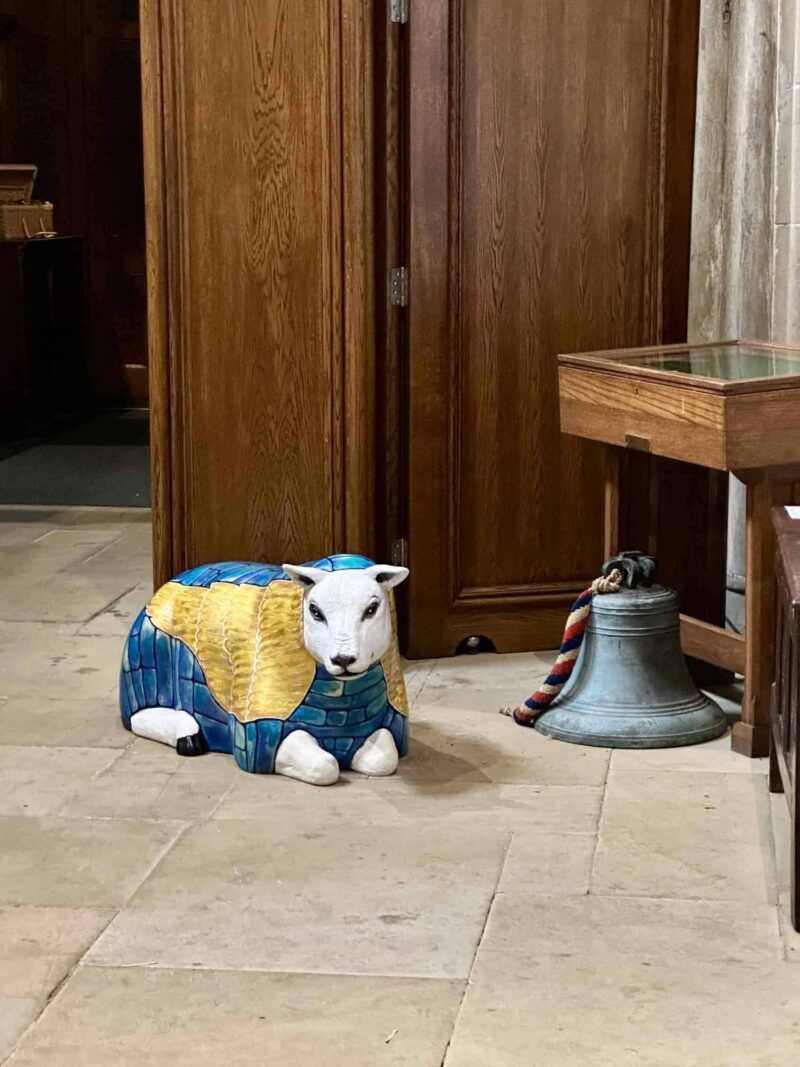
Though, the sheep you may see laying inside the church is surprisingly not in Llewelyn’s honour, but is part of the Wrexham sheep trail – psst – if you do a St Giles’ Church Tower Tour you may even spot another sheep from the trail from the top…
I’d highly recommend climbing the 149 steps up the winding staircase to the top of St Giles’ Tower, which has fabulous views over Wrexham and you can also find out about bell-ringing (a skill that is much harder than you think!) I was absolutely put to shame after watching Diane (our guide) expertly ring the bells as we all watched in awe.
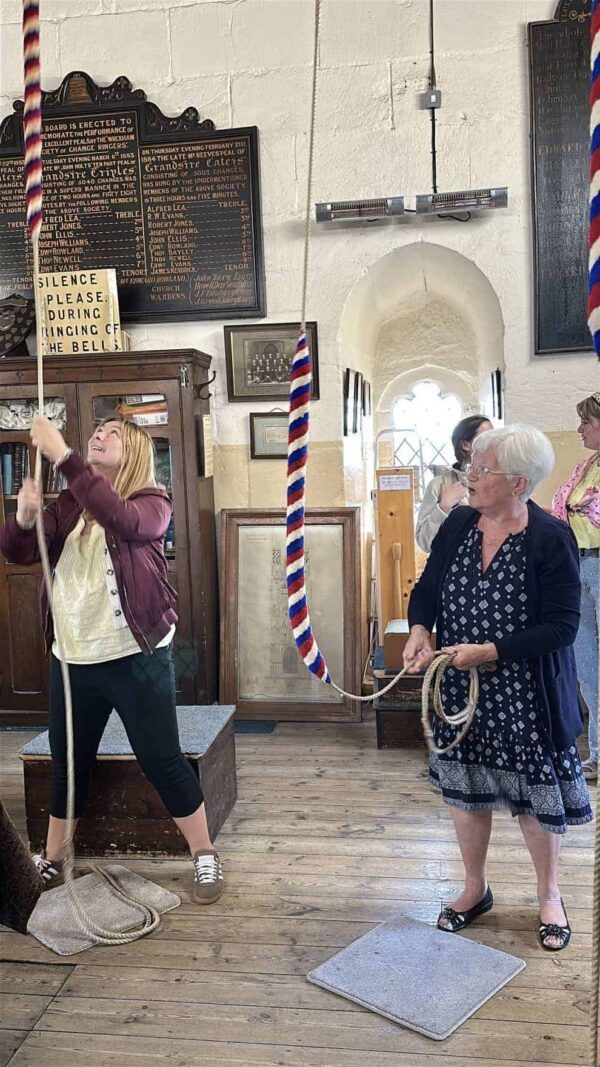
I was surprised to learn that the Tower climb of 135ft (41M) is only 2 metres lower than the Pontcysyllte Aqueduct, which seemed a bit unfair considering I could hardly breathe after climbing the steps to the top!
As someone who only normally visits churches on holiday, I thoroughly enjoyed the St Giles’ Church Tour thanks to Petra and Diane who brought some light-hearted fun, Alan, who is the sweetest with his torch in tow – with him and Kathryn knowing all the facts surrounding the church’s vast history. It was unlike other church tours I have done previously, and I would recommend even if church tours are not normally your thing – located in the centre of town, it would be rude not to visit in my opinion.
Ps – Kathryn…I think I found one of the missing St Giles windows in none other than The Turf pub, located next to…you guessed it the Racecourse Ground home to Wrexham AFC.
The Practical Bits:
- Where: St Giles’ Church, Wrexham town centre
- Admission: Free (donations welcome)
- Tower tours: Available on the first Saturday of every month (between 11-12pm) – £6 check with the church for current times.
- Look for: Elihu Yale’s tomb in the churchyard, the medieval carvings on the tower, and the 1719 wrought-iron gates
Beyond Football – Is Wrexham Worth Visiting?
I’d be lying if I said the main draw for me visiting Wrexham wasn’t tracking down Ryan Reynolds…and in all honesty, I had more luck tracking down the sheep on the Wrexham Sheep Tour…(ps – how many sheep did you count in this post?!) But, I soon discovered there is so much to uncover in Wales’ newest city, and beyond in the county of Wrexham!

That’s not to say, The Racecourse ground, proudly known as the oldest international football stadium in the world, isn’t worth visiting. Our group headed to the football ground and enjoyed a drink in the famous pub, The Turf, where we were greeted by the landlord Wayne, a Welcome to Wrexham icon, alongside Brian Still (Welcome to Wrexham Tours) with a surprise visit from former Wrexham player Neil Roberts who is now the owner of Vault 33 (a bar in town) if you’re a fan of the show and want to catch a glimpse!



Here’s some pictures for me to look back on when I’ve finally got through the Welcome to Wrexham series!
Whether you’re a football fanatic or just curious about the town that Ryan Reynolds and Rob McElhenney decided to put their name (and money) behind, it’s well worth immersing yourself in the football element of the city to understand more about local life and the rekindled passion and pride locals have found for the city in recent times after many hardships.
Wrexham is a city that is constantly evolving, whilst still honouring its roots – and after my visit, Wrexham certainly has my vote for City of Culture 2029…after my city Milton Keynes, of course!
I hope this post has inspired you to visit Wrexham as there is so much to see!
📌 If you found this post helpful, don’t forget to save it to your Pinterest board for when you’re planning your trip! Or use the sharing icons to inspire others to visit!
Happy travels!
Jaz